Tesla's Robot Program Turns a Corner With New Training Academy
A new training facility and high-volume production line are designed to teach robots on their own.
By Priya Sharma ·
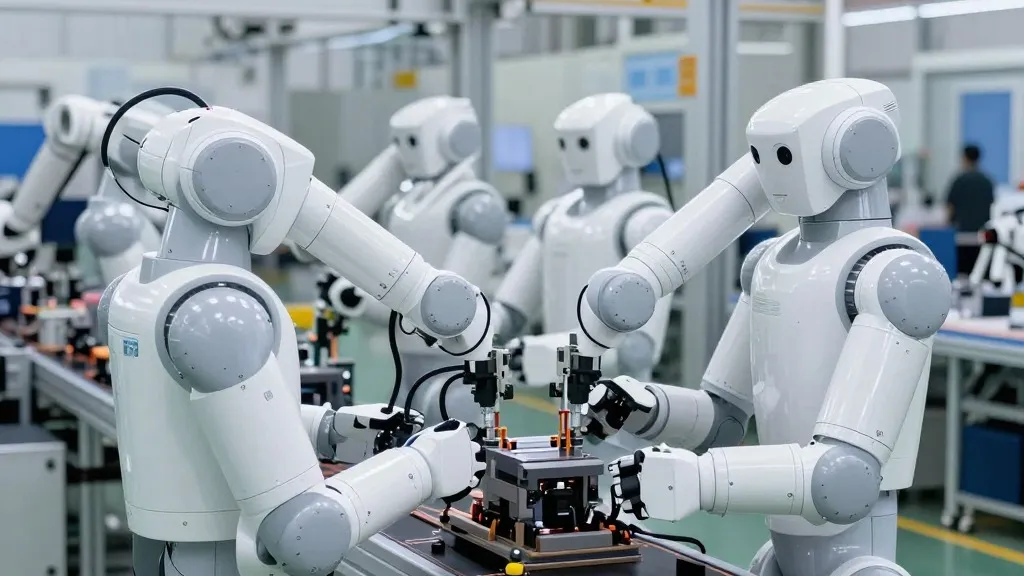
Tesla has begun assembling its humanoid robots on a high-volume production line at its Fremont factory. The company announced in its third-quarter shareholder letter that these are the first units to meet production-quality standards. Tesla stated it has "proven that the current manufacturing process for Optimus is suitable for a commercial product." This facility was previously used for building Model S and Model X vehicles until the spring, when Tesla repurposed the space for robot production. The line is designed for an annual output of one million units.
To address how to train these robots for real-world tasks, Tesla is creating an Optimus Academy. This program will use thousands of robots to practice a wide range of tasks. The knowledge they gain will be used to improve future versions of the AI. Elon Musk noted a key difference between the robots and the company's cars, saying, "A big difference with Optimus versus the cars is we don’t have this vast fleet of cars from which we can gather training data." Every unit produced at the Fremont facility will contribute to this training pool.
Production is expected to ramp up significantly. During a recent earnings call, Musk said most of the equipment for a capacity of about 20,000 robots per week is already at the Fremont site. He described this growth as a gradual start, stating, "The growth of Optimus is an S curve, but the initial curve is a shallow slope." The company is also working on improving the robot's AI, reliability, and service life, with that work expected to conclude by the end of next year.
The supply chain is being prepared for larger-scale production. In September, Tesla certified Tuopu, Joyson, and Sanhua as mass production partners for robot components. A much larger factory for these robots is also being built at Giga Texas, with a long-term production target of 10 million units per year. Furthermore, Tesla executives indicated that the cost of producing each robot is moving toward the expected manufacturing cost of the Cybercab vehicle.
Engineering efforts are focused on refining the robot's capabilities. Musk expects a new video of the robot performing tasks driven by AI, not pre-programmed motions, within the next one or two months. He also criticized rival humanoid robots that only run scripted routines. The hands remain the most difficult part of the design to engineer, and Tesla is concentrating its current efforts there.
The company has not yet begun delivering Optimus units to outside companies. This is planned to start by the end of next year for jobs that are dangerous, repetitive, or require around-the-clock work. The supply chain is being lined up to support this program.
Source: Teslarati