NASA Restructures Lunar Mission Architecture to Accelerate 2028 Moon Landing
New docking protocols for SpaceX and Blue Origin remove technical bottlenecks, setting a firm trajectory for crewed lunar surface operations within three years.
By Brianna Jackson ·
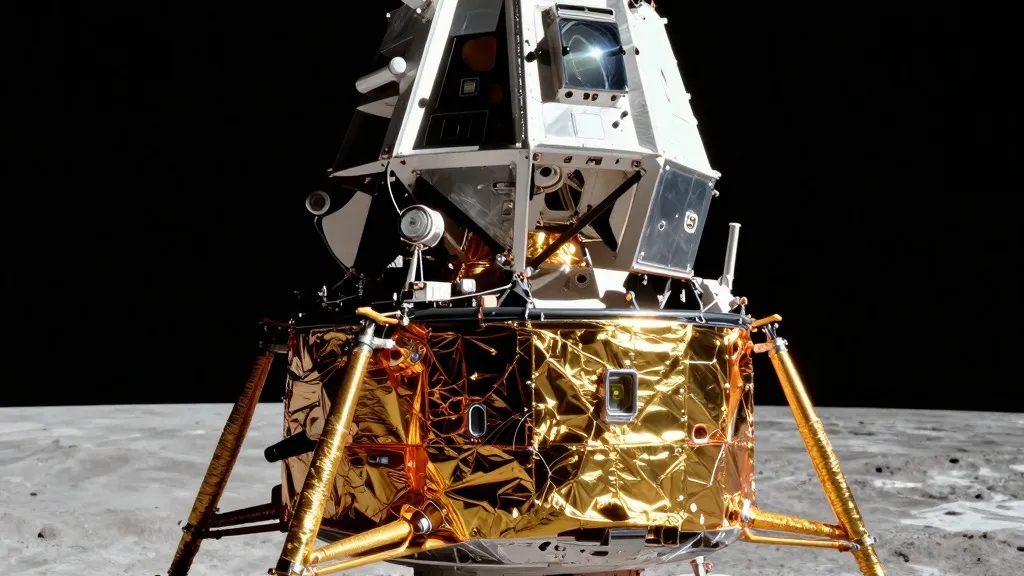
For investors and stakeholders tracking the commercial space sector, the path to monetizing lunar access has just become significantly clearer. On Friday, NASA presented a revised operational framework for its Artemis program, officially confirming a target for human lunar landings as early as 2028. This update resolves long-standing technical ambiguities that had previously clouded the financial outlook for the program’s primary contractors, SpaceX and Blue Origin.
The core of the update involves a fundamental shift in how spacecraft will interact in orbit. For SpaceX, the new plan mandates that the Orion spacecraft dock with the Starship lunar lander in high-Earth orbit. This occurs before the combined vehicles transit to the Moon. This change eliminates the requirement for the Starship to perform complex maneuvers in near-rectilinear halo orbit, a phase that had been identified as a significant technical and energy burden. By moving the docking event closer to Earth, the architecture reduces the risk profile for the first crewed lunar landing attempts.
Blue Origin faces a different but equally definitive architectural change. The agency’s updated plan for the Blue Moon lander involves four separate launches of the New Glenn rocket. Crucially, this configuration removes the need for in-space refueling between spacecraft. Furthermore, the plan allows for the Blue Moon lander to rendezvous with Orion in low-Lunar orbit. This simplification addresses previous concerns regarding the complexity and cost of orbital propellant transfer, a process that has historically presented significant engineering challenges for private aerospace firms.
During the news conference, NASA officials reaffirmed their timeline for the intermediate phase of the program. The Artemis III mission, which will serve as a demonstration involving docking with both the Blue Moon and Starship vehicles in near-Earth orbit, remains on track for a launch in the summer of 2027. Following this demonstration, Artemis IV is scheduled for 2028, marking the first actual landing on the lunar surface. These dates have now been formally integrated into the agency's strategic roadmap.
NASA Administrator Jared Isaacman emphasized the agency's commitment to these targets, stating that the current trajectory is achievable. "We have the mandate, we have the resources, and the support from our stakeholders to be able to execute, and that’s what we intend to do," Isaacman said. His comments signal a shift from exploratory planning to active execution, suggesting that the agency believes the technical and logistical hurdles have been sufficiently mitigated to support aggressive scheduling.
The revisions come after a period of intense review by NASA leadership and the contracted aerospace partners. In early 2026, SpaceX engineers engaged in detailed discussions with NASA officials, specifically requesting the removal of the lunar halo orbit docking requirement. The agency’s decision to cancel the Lunar Gateway project earlier this year inadvertently solved this specific problem for SpaceX, allowing the Starship architecture to align with more efficient orbital mechanics. This resolution removes a major variable that had previously complicated the vehicle's design and testing phases.
For the market, the clarity provided by these updates reduces the uncertainty surrounding the development costs and timelines for both private partners. By standardizing the docking and launch protocols, NASA has provided a stable framework for SpaceX and Blue Origin to finalize their hardware designs. The elimination of in-space refueling for Blue Origin and the relocation of the SpaceX docking point both represent substantial cost and schedule savings, potentially allowing for faster iteration of the lander vehicles.
While the agency expresses confidence in the 2028 deadline, the success of the program will now hinge on the ability of both private contractors to meet these revised architectural specifications. The next major milestone will be the summer 2027 launch of Artemis III, which will serve as the critical validation test for the new docking protocols. Until that demonstration is successfully completed, the 2028 lunar landing remains a target rather than a guarantee, but the path to it is now more defined than at any point in the program's history.
Source: Ars Technica