Displaced Wolves Enter Finnish Villages as Google Pauses Forest Clearing for AI Hubs
Local residents report increased wildlife presence in their homes following the unauthorized removal of over 1,300 acres of forest near Muhos and Otanmäki.
By Emily Carter ·
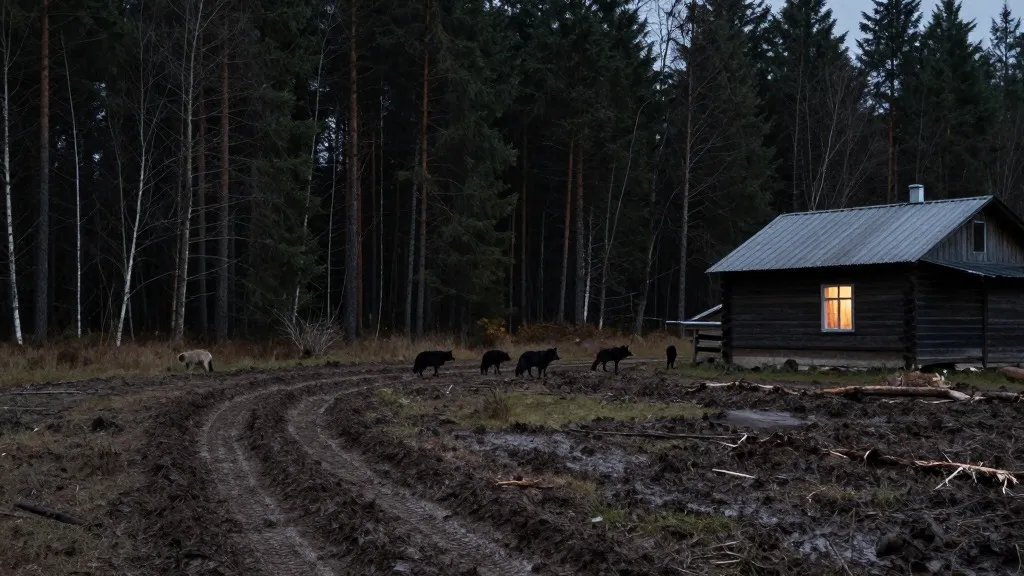
For families in the rural communities of Otanmäki and Muhos, the daily reality has shifted from quiet countryside living to navigating a landscape changed by industrial expansion. The most immediate change for ordinary residents is the arrival of wolves and other wild animals into village areas, a development that locals describe as a significant safety concern. These animals, previously contained within dense woodland habitats, are now roaming freely into residential zones, forcing residents to adjust their daily routines and manage new risks associated with proximity to large predators.
The source of this disruption is a series of construction sites where Google has been developing data centers for its artificial intelligence infrastructure. The company’s Finland country manager has issued an apology for the clearings, acknowledging that 816 acres of forest near Muhos have been transformed into a muddy expanse. Additionally, authorities have ordered a halt to work on roughly 500 acres of cleared land near Otanmäki, located 55 miles southeast of the village. In total, approximately 1,300 acres of forest, which served as a critical habitat for local wolf packs, have been removed or significantly altered.
The timeline of events leading to this situation began with Google’s rapid expansion plans in Finland. The company moved quickly to secure land for new AI data centers, a pace that local officials and environmental groups say outstripped regulatory checks. Earlier this month, the Finnish Licensing and Supervision Authority (LVV) issued a formal notice to Google, ordering it to stop construction activities in both Muhos and Kajaani, the area near Otanmäki. This order followed a review that found the company had proceeded with clearings without fully adhering to established environmental policies.
Local anger has simmered for weeks, but the arrival of the wolves has intensified the public reaction. Anni Ranta, 53, a resident of Otanmäki whose family has lived in the area for generations, explained that the wild animals moved out of the forest because their habitat was destroyed. “We had wolves coming into the village because all the wild animals moved out of the forest,” Ranta stated. Beyond the wildlife issue, Ranta and other locals have expressed concerns that the U.S.-owned data centers may make Finland a more attractive target for Russian aggression, adding a geopolitical layer to the environmental dispute.
The complaints extend beyond just the presence of wolves. Residents have reported a variety of side effects from the construction, including persistent factory noise and streams that have turned brown due to runoff. Rare bird species have also been pushed out of the area. A representative for the Finnish Association for Nature Conservation (SLL) described Google’s handling of environmental policy as unprecedented in its clarity and scale. The LVV’s intervention confirms that regulators agree the project has faced significant compliance issues.
Despite the regulatory stop-work order, Google maintains a cooperative stance. A spokesperson for the company stated, “We will fully comply with LVV’s requests in this matter.” The company expressed its desire to maintain an active and open dialogue with Finnish authorities and local organizations to strengthen its partnership. Google appears to be banking on the long-term business benefits of the data centers to sway both the government and regulators in its favor.
The situation in Finland mirrors similar debates occurring in the United States and other countries regarding the environmental footprint of AI infrastructure. However, the specific combination of unauthorized clearing and the immediate ecological impact on wolf populations has made this case particularly prominent. The mud-flats that replaced the forest are now a visible symbol of the conflict between technological expansion and local ecological preservation.
As the construction pauses, attention turns to what happens next. The LVV’s order is a temporary halt rather than a permanent cancellation, leaving the final status of the project in question. Local residents are watching closely to see if Google will remediate the damage or simply resume work once permissions are re-evaluated. For now, the villages remain on high alert as the displaced wildlife continues to navigate its new, human-occupied territory.
Source: Tom's Hardware